The Voice of a Yoga Teacher: From Ancient Gurukul to the Modern Cue
In this article, we explore the origins of asana cueing and trace how it has evolved through history. You'll discover practical tips to enhance your own cueing, along with ways PranaPath can support your growth, whether you're a new yoga teacher or looking to refine your skills further.
Hemant Kumar
PranaPath
Your voice is the most powerful tool you have as a yoga teacher. It is the medium through which you hold space, guide movement, and keep your students safe.
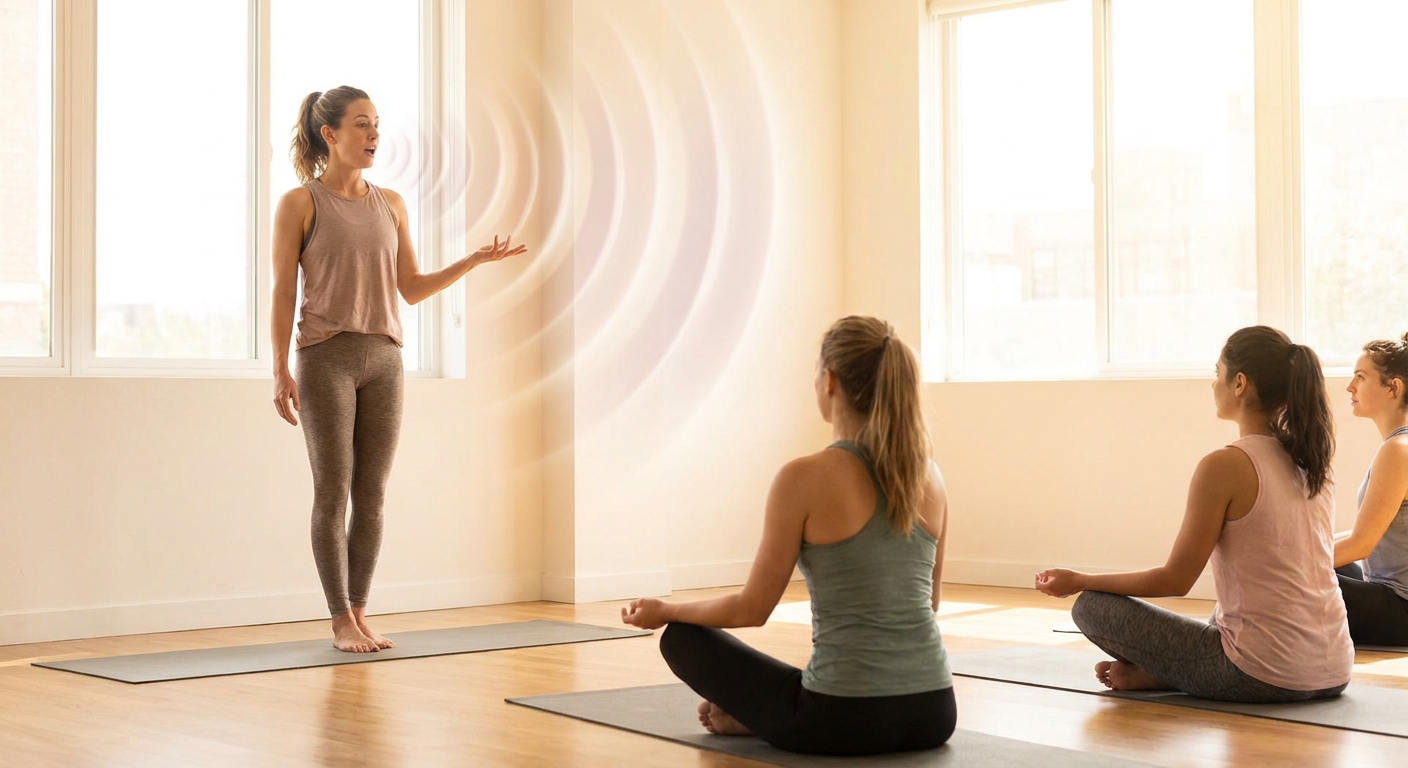
Yet one of the hardest things many new yoga teachers find is the confidence to project that voice and deliver continuous, clear instructions. Asana cueing requires juggling multiple things at a time: you have to be safe, anatomically correct, perfectly paced, connected with the breath, include contraindications and the usage of props, and depending on the lineage you follow you may have to change a thing or two. So it is totally okay if you stumble over your words or lose track of the breath while guiding a sequence. The good news is that, like many other things, continuous practice makes you better in no time. And that is rightly why many Yoga Teacher Trainings include dedicated sessions and practices on the voice.
In this post we dive deeper into how a growing yoga teacher can tackle those challenges and how to train to make cueing a muscle memory. But before that: has asana cueing been like this throughout yoga history? How were they instructing back in the ashram and gurukul days?
Evolution of the Cue
If you look at the classical texts and the traditional gurukul system, the concept of a teacher standing at the front of a room verbally micromanaging thirty synchronized moving bodies is nowhere to be found.
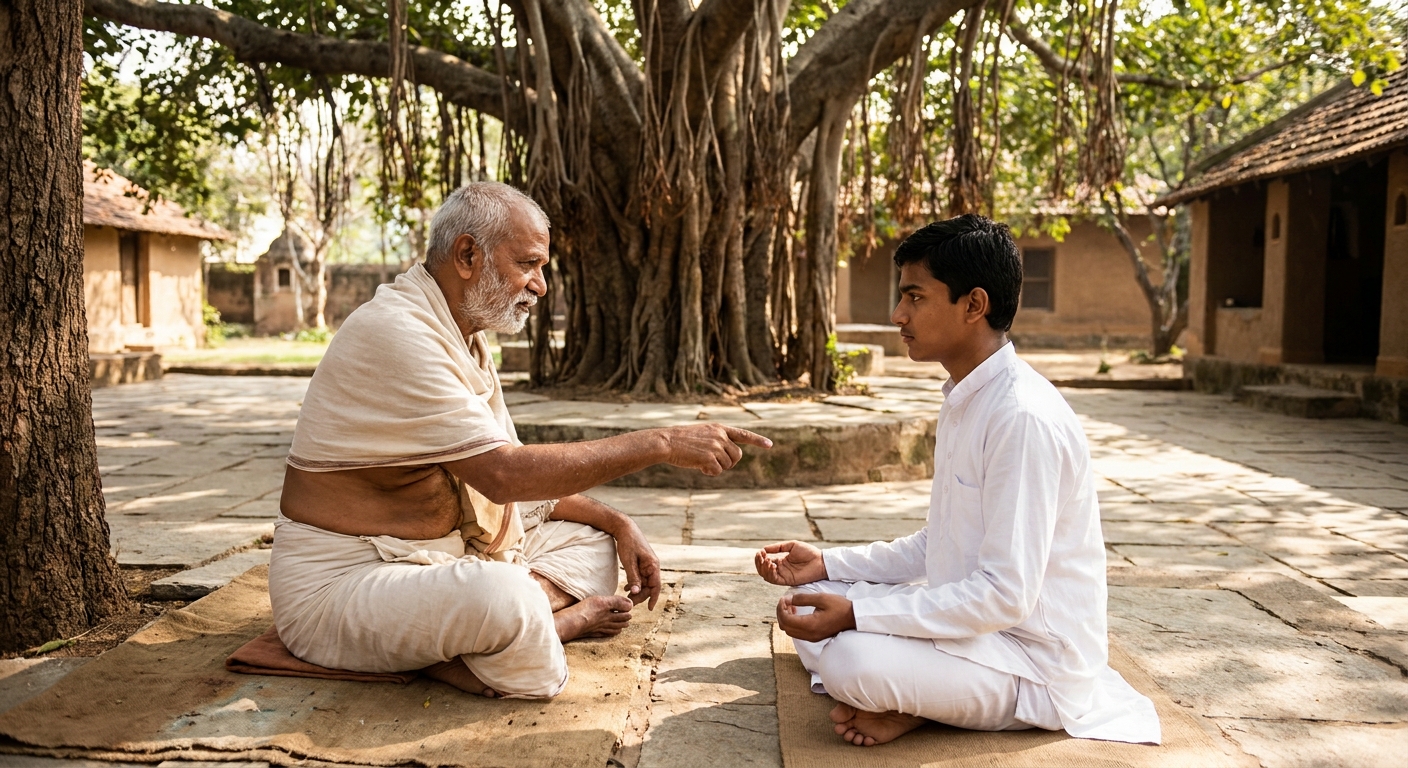
Even the mention of asanas is rather limited. Patanjali mentions asana in only 2 of his sutras out of a total of 196. More emphasis was placed on the other limbs of yoga, with the main purpose of reaching higher states of meditation. Secondly, the transmission of knowledge relied on a multi-year, one-to-one lineage from teacher to student. The teacher had a bond with a selected group of students and would observe the student and offer direct and specific verbal instruction whenever necessary. There was also a finite set of asanas one would work on. The teacher didn't deliver a continuous script; they watched quietly and offered precise, individualized feedback exactly when it was needed.
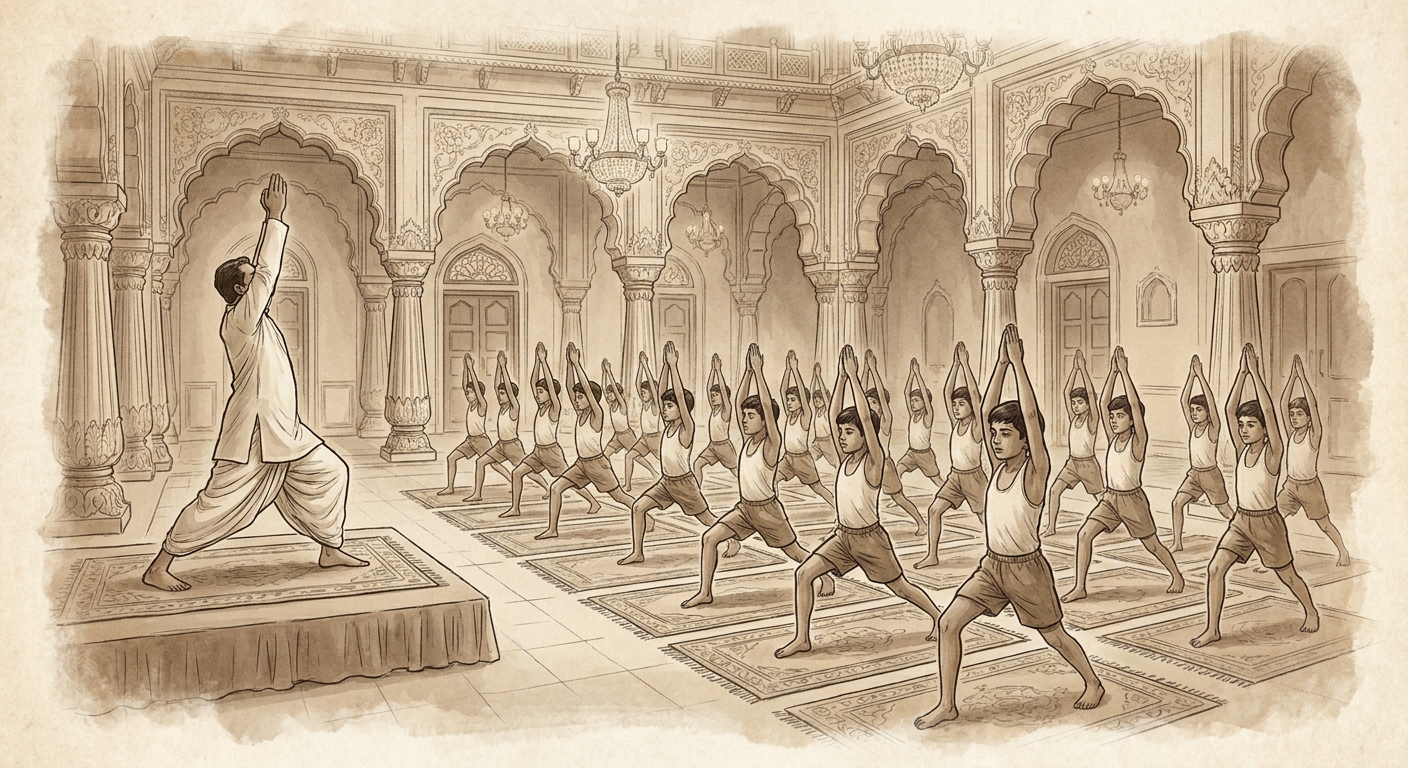
The continuous, flowing verbal cueing we know today was notably pioneered by Sri Tirumalai Krishnamacharya in Mysore during the 1930s. As he began teaching large groups of young boys, he not only developed the modern vinyasa but also pioneered the usage of continuous verbal commands to keep everyone synchronized and safe. And since then yoga has continuously evolved alongside the growing needs of its practitioners.
Anatomy of the Modern Cue
Today yoga classes are creative and can incorporate the use of Pilates, Yin Yoga, restorative poses, and even some high-intensity exercises. The spectrum of variety is wide. And hence some essential elements of asana cueing are more important today than ever. Let's break it down.
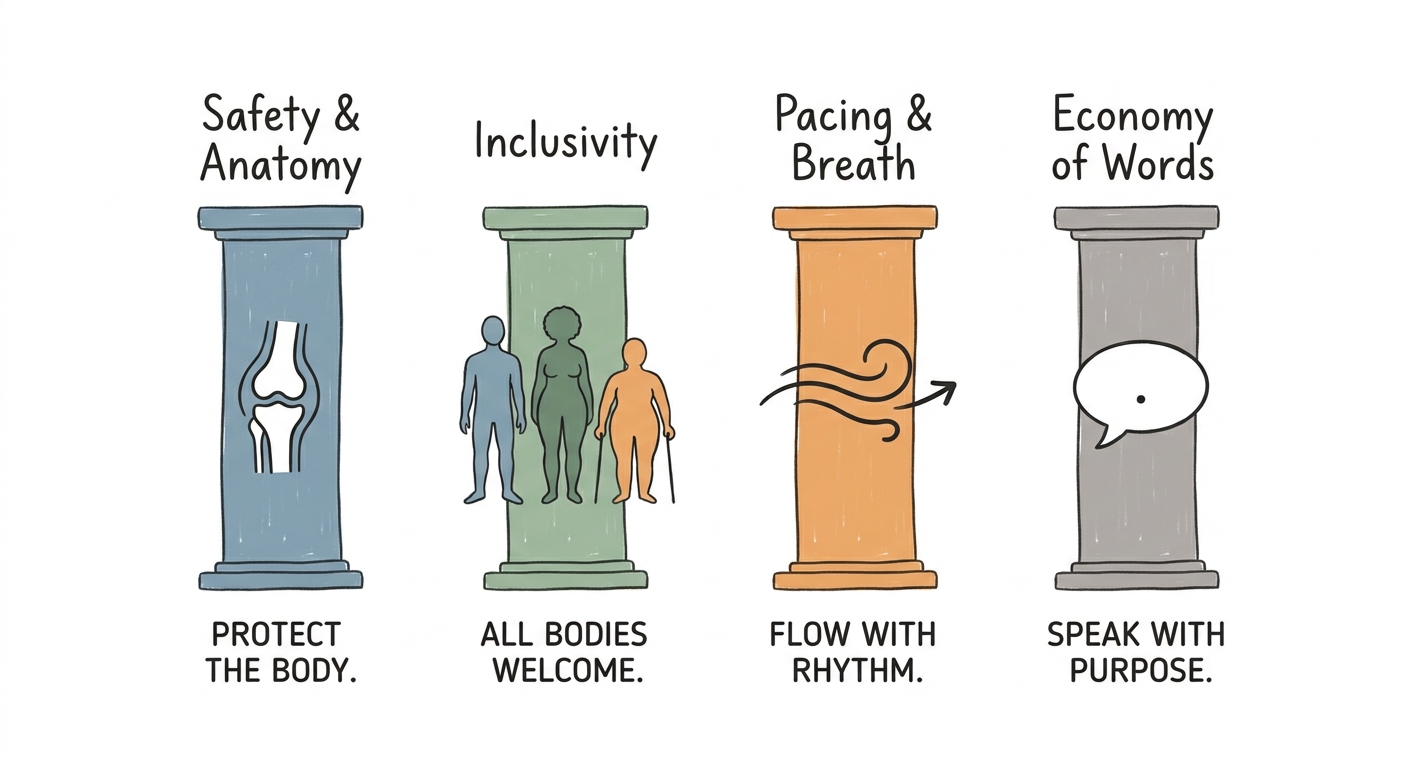
Safety & Anatomy
Having the knowledge of anatomy and highlighting the correct biomechanics to protect the joints and bones is critical. Applying inward rotation or outward rotation can make a lot of difference in certain poses. The last thing you want is to provide an instruction that results in injury.
Inclusivity
Using language that welcomes all body types and abilities. A fundamental principle of modern functional anatomy is the insight that:
"Poses don't have alignment, people do."
— Leslie Kaminoff and Amy Matthews (Authors of Yoga Anatomy)
For decades, teachers cued based on a "perfect" outward shape (e.g., "front heel intersects the back arch"). Kaminoff and Matthews revolutionized modern teaching by emphasizing that every skeleton is different. A great cue doesn't force a student into a shape; it helps them find the functional alignment for their specific body.
Pacing & Breath
"Yoga is not about touching your toes, it's about what you learn on the way down."
— Judith Hanson Lasater (Pioneer of Restorative Yoga)
Lasater reminds us that cues shouldn't just be a mechanical checklist of body parts. The tone, pacing, and breath integration of a cue are what allow the student to actually "learn on the way down." If a teacher is rushing through commands just to get the student into the final pose, they rob the student of the transition.
Economy of Words
"All details matter, but not all details matter equally."
This anchor for effective cueing reminds us that less is more. Saying exactly what needs to be said, without over-explaining, prevents overwhelming the room. Over-cueing can often bury the most critical alignment data in a sea of unnecessary detail.
Physical Practices to Improve Your Voice
Before you even think about the words you are saying, you also have to think about how you are saying them. When I first graduated from my YTT, I thought good cueing meant adding more details, but I soon realized that vocal clarity is just as vital. Here are some physical exercises to release tension:
- The "Cork Trick": Place a wine cork lightly between your front teeth and read a sequence script out loud. It forces your facial muscles to work harder. When you take the cork out, your articulation will feel incredibly sharp. We did this in our own YTT with Yoga on the Move, Berlin, and everyone thoroughly enjoyed the practice.
- Jaw Release Exercises: Stress lives in the masseter muscles. Open your mouth wide, stretch your tongue out (like Lion's Breath), and sigh loudly to release vocal cord tension before teaching. Doing a Lion's Breath a few times a day helps relieve any built-up anxiety.
- Diaphragmatic Projection: Speak from your belly, using core support to push the sound across the room rather than straining your throat.
Closing the Feedback Loop
During YTT, your teachers give you instant feedback if you speak too fast or forget a breath cue. But once you graduate, that feedback loop is broken. You are suddenly practicing in a vacuum.
To bridge this gap, PranaPath comes with an intelligent cueing feature. It is designed to act as a digital mentor, bringing the concept of Upadesha into your solo practice by providing objective analysis of your vocal delivery.
You select an asana, for example Warrior I, and then select which asana you want to transition from (e.g., Mountain Pose to Warrior I), and record a 90-second audio clip of your instruction. The platform, which is trained directly on your specific school's lineage, analyzes your audio. It gives you targeted feedback on your vocabulary, pacing, anatomical accuracy, and breath integration.
James Clear explains in Atomic Habits how confidence is built through small, consistent habits, and how we can create systems to make those habits stick. By understanding the history of how we teach, practicing your vocal mechanics, and utilizing intelligent tools to get objective feedback, you can command the room with clarity and ease.
Key takeaways
- Your voice is your most important teaching tool, and projecting it with confidence is a learned skill rather than a talent you are born with.
- Continuous verbal cueing is modern: it was pioneered by Krishnamacharya in 1930s Mysore, not found in the classical gurukul system.
- A strong cue balances four things: safety and anatomy, inclusivity, pacing and breath, and economy of words.
- Train your voice physically with the cork trick, jaw release, and diaphragmatic projection, then close the feedback loop with objective practice.
If you run a teacher training or want to practice your cueing with objective feedback, join the PranaPath waitlist.
Frequently asked questions
What is asana cueing?
Asana cueing is the spoken instruction a yoga teacher gives to guide students into and through poses, covering alignment, breath, pacing, safety and modifications. Modern continuous cueing keeps a whole group moving together and safely.
Who invented continuous verbal cueing in yoga?
Continuous, flowing verbal cueing was pioneered by Sri Tirumalai Krishnamacharya in Mysore during the 1930s. Teaching large groups of young boys, he developed modern vinyasa and used continuous verbal commands to keep everyone synchronized and safe. The classical gurukul system relied instead on one-to-one observation and individual correction.
What makes a good yoga cue?
A good cue balances four things: safety and anatomy (protecting joints with correct biomechanics), inclusivity (welcoming every body type, since poses don't have alignment, people do), pacing and breath (integrating tone and breath rather than reciting a checklist), and economy of words (saying only what matters most).
How can I improve my voice as a yoga teacher?
Practise physical vocal exercises before teaching: the cork trick (reading a script with a cork between your front teeth to sharpen articulation), jaw-release exercises like Lion's Breath, and diaphragmatic projection (speaking from the belly rather than straining your throat). Consistent practice turns clear cueing into muscle memory.